Keep & carry
Knife Care
A good knife kept badly becomes a bad knife within a month. None of this is complicated.
The safe sequence
- 01
Wash it by hand, dry it immediately
The dishwasher is the single fastest way to ruin a knife: heat and detergent attack the edge, and the handle swells and loosens. Wash by hand in warm water, dry it on a cloth, put it away dry. Water left sitting on a blade will mark even stainless steel.
- 02
Cut on wood or soft plastic
Glass, stone, steel and ceramic boards destroy an edge on contact. Wood and soft plastic give slightly under the blade, which is exactly what you want. What you cut on matters more to sharpness than how often you sharpen.
- 03
Hone often, sharpen rarely
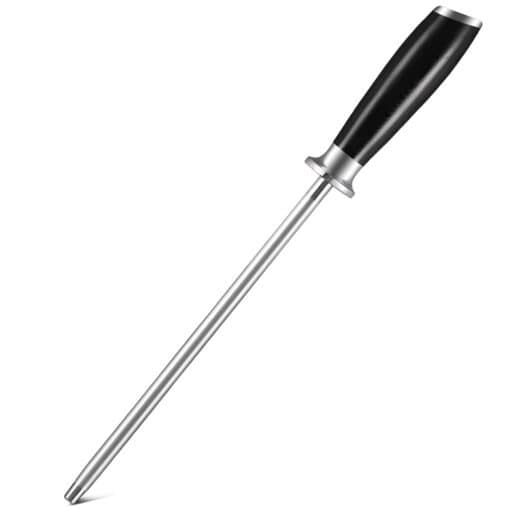
Most knives that feel blunt are not blunt — the edge has rolled over to one side. Honing straightens it back and takes seconds. Actual sharpening removes metal and should happen a few times a year, not weekly.
- 04
Store it so nothing touches the edge
Loose in a drawer, a knife bangs against everything else in there and comes out dull and chipped — and it is the most likely way to cut your hand reaching in. A magnetic rack, a blade guard or a roll all solve it.
- 05
A sharp knife is the safer knife
A dull blade needs force, and force is what makes it skid off an onion and into your hand. Sharp knives go where you point them.
Compatible tools